How to choose the ideal welder: the complete guide for professionals and DIYers
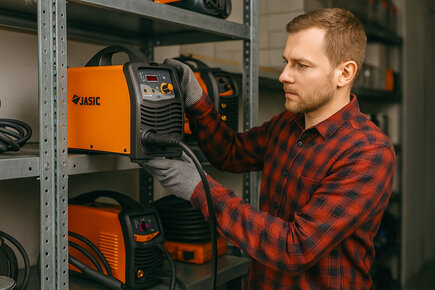
Find out how to choose the right welding machine for your needs. We compare types of welders, their pros and cons, and offer advice on what to focus on when making a purchase.
👁️🗨️ The Importance of Choosing the Right Welder for Work Quality and Safety
Choosing the right welding machine is a key step not only for achieving high-quality welds but also for ensuring a safe working environment. Each welding technology has its specific characteristics and is suitable for different materials, thicknesses, and working conditions.
Work quality is directly affected by whether the welder is suited for the intended process. Choosing the wrong type or settings can result in weak, porous, or cracked welds. For example, when welding thin aluminum sheets, it is essential to use TIG or MIG with the appropriate shielding gas to avoid overheating and warping.
Safety in welding depends not only on personal protective equipment but also on the machine itself. A high-quality welder ensures a stable arc, correct current and voltage control, reducing the risk of burning through material, unexpected arc flash, or fire. Modern machines often include safety features such as automatic shutoff during overheating or improper power supply.
A well-chosen welding machine improves work efficiency, reduces waste and rework, saving both time and money. The investment in proper equipment pays off quickly in the form of reliable results and a safe workspace.
🪄 Key Factors to Consider When Choosing
Different materials require different welding processes and equipment. Recommendations for steel, aluminum, and stainless steel:
| Material | Recommended Process | Type of Welder | Key Features |
| Steel | MAG (CO₂/Ar+CO₂) or MMA | Inverter MIG/MAG, MMA inverter | • Output 150–350 A • Synergic modes for steel wire • Duty-cycle ≥ 60% at 200 A |
| Aluminium | MIG Al (inert gas Ar/He) or TIG AC | Inverter MIG with Al-kits, TIG AC/DC inverter | • AC for oxide layer removal • Adjustable torch, smooth wire feed • Adjustable pulse mode (advanced) |
| Stainless steel (inox) | TIG DC or MIG with Ar+2–5% O₂ | TIG DC inverter, MIG/MAG inverter | • DC+ for deep penetration • Current and temperature control • Use of active gas (Ar+O₂) for stability |
Selection Notes
- For steel, the most versatile are MIG/MAG inverters with CO₂ or Ar+CO₂ mix. MMA is used for repairs and outdoor work.
- Aluminium should be welded using MIG with a special aluminium tip and wire, or TIG AC for highest quality welds.
- Stainless steel needs a clean arc – TIG is the best choice, MIG with a small % of O₂ helps stabilize the weld pool and reduce porosity.
For all materials, ensure correct current settings, wire feed speed, and gas flow according to the recommendations of the consumables manufacturer.
Material Type
• Different welders are suitable for different materials (steel, aluminium, stainless steel, copper).
• For example, TIG is ideal for aluminium and delicate work, MIG/MAG for steel structures.
Material Thickness
• Thinner sheets require finer processes (TIG, MIG).
• Thick steel parts require higher power welders (MMA, plasma welding).
Welding Process
• Choose as needed: MIG/MAG (speed), TIG (precision), MMA (versatility), Plasma (precise and deep welds).
Power and Supply
• Home workshops: 230 V (single-phase).
• Industrial environments: 400 V (three-phase) and higher output.
Usage Frequency
• For hobby use, a simpler model will suffice.
• For professional use, more robust and durable machines are needed.
Mobility and Weight
• For fieldwork, a light and portable welder is better.
• For workshop use, a larger and more powerful stationary model is ideal.
Protective and Safety Features
• Functions such as thermal protection, current stabilization, and overload protection increase both safety and the machine’s lifespan.
Price and Budget
• More expensive machines offer better features and durability, but there are also affordable quality options for less demanding jobs.
Availability of Service and Spare Parts
• Choosing a brand with reliable service and spare parts availability will save you many problems in the future.
Additional Features
• Settings for synergic modes, digital display, memory for preset modes – everything that simplifies your work.
🎭️ Welding Machine Comparison for Specific Applications
| Criterion | MMA | MIG/MAG | TIG | Laser | Resistance |
| Precision | Low | Good | Excellent | Excellent | Good |
| Suitability for thin materials | Poor | Medium | Excellent | Excellent | Good |
| Ease of use | Good | Good | Medium | Low | Good |
| Outdoor environment | Excellent | Poor | Poor | Unsuitable | Good |
| Speed | Low | High | Medium | Very high | High |
| Home use | High | Medium | Medium | Low | Low |
| Industrial use | Medium | Very high | High | Very high | Very high |