What to do if the weld tears or cracks?
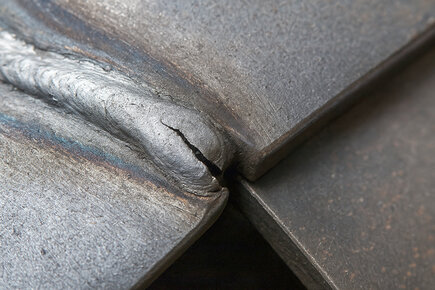
Is your weld cracking or breaking apart? Discover the most common causes of weld damage and practical tips to prevent them.
A weld that cracks after cooling or tears during welding is a frustrating issue for any welder. It's not just about aesthetics – cracks significantly reduce the strength and reliability of the joint, and in some cases, they can compromise the safety of the entire structure. In this article, we’ll explore the most common reasons why welds crack and offer proven solutions to prevent these problems.
⛔️ Inappropriate filler material or incorrect method
- Problem: Using the wrong filler material or incorrect type of electrode/wire for the base metal.
- Solution: Ensure that the filler material is compatible with the base metal. For example, when welding high-strength steel, use specialized electrodes. For aluminum, make sure to use the correct TIG filler wire (e.g., ER4045, ER5356).
⛔️ Incorrect welding current and travel speed settings
- Problem: Too high or low current causes overheating or weak penetration. Excessively fast torch movement leaves an imperfect weld.
- Solution: Check the settings for current, voltage, and wire feed speed. The weld should have a smooth, even structure without noticeable cracks in transition areas.
⛔️ Improper weld geometry (e.g., sharp root, insufficient overlap)
- Problem: High stress concentrations at sharp transitions cause cracking.
- Solution: Increase root gap, improve joint preparation (e.g., wider bevels). Use multiple passes instead of a single heavy weld.
⛔️ Inadequate preheating and rapid cooling
- Problem: Thermal shock, especially when welding hard or thick materials (cast iron, high-strength steel).
- Solution: Preheat the base material (e.g., 100–300 °C depending on steel type).
- Slow cooling after welding (e.g., cover with a blanket or use a furnace).
- Avoid drafts and humidity during cooling.
⛔️ Contamination in the weld zone
- Problem: Oil, rust, paint, moisture or other impurities interfere with weld chemistry.
- Solution: Thoroughly clean the base material before welding (grinding, degreasing, removing oxides).
- For TIG/MIG welding, ensure shielding gas is clean and filters are not clogged.
⛔️ Poor shielding gas or insufficient flow
- Problem: Inadequate shielding causes oxidation and porosity, which lead to cracking.
- Solution: Increase gas flow (e.g., 10–12 l/min for MIG). Check nozzles and tips for blockage. Avoid drafts – shielding gas may be dispersed, leaving the weld exposed.
⛔️ Welding incompatible metals
- Problem: Joining materials with different expansion rates, hardness or structure (e.g., copper + steel) can lead to microcracks.
- Solution: Use special techniques (interlayers, compatible alloys). If possible, select a more homogeneous material pair.
⁉️ What to do if the weld has already cracked?
- Stop welding immediately. Continuing may worsen the defect.
- Grind out the entire damaged weld including 10–20 mm of surrounding area.
- Re-weld with proper settings and conditions.
- Inspect the entire joint visually or with NDT (e.g., dye penetrant or ultrasonic testing).
- If cracks persist, consult a metallurgist or welding engineer.
🔄 Conclusion
Weld cracking or tearing is not just a technical issue – it often results from a combination of problems: poor setup, incompatible materials, improper preparation or technique. Careful analysis and a clean, controlled environment are the best prevention. When in doubt, always consult an expert or your welding equipment provider.