Most common errors in the use of welding burners
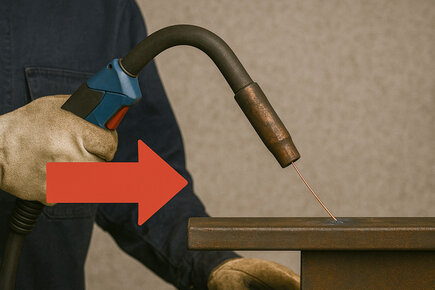
Even if you have a high-quality welding torch, improper use or neglecting maintenance can lead to various issues during operation. Let’s look at some of the most common mistakes welders face and how to avoid them.
What problems can occur during welding?
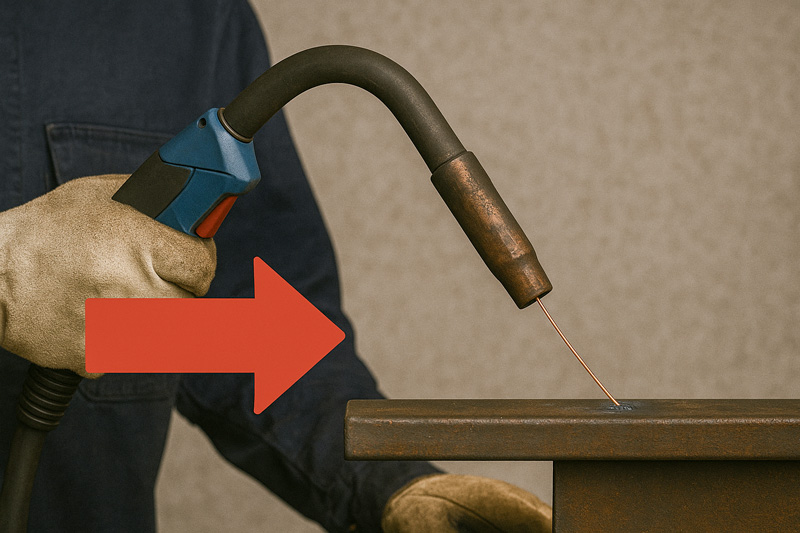
Wire jamming in the torch
Symptoms: intermittent arc, irregular wire feed, jerking torch in the welder’s hand.
Most common causes:
- Clogged or damaged liner – metal shavings, rust, or deformations increase friction.
- Worn contact tip – an oval hole slows down the wire.
- Incorrect drive roll tension – wire deforms into a “bird's nest”.
- Poor-quality or rusty wire – surface dust clogs the liner.
Prevention and solution:
- Blow out the liner with compressed air once per shift, or replace it after 150 kg of wire.
- Always use a Teflon liner for aluminum and stainless steel; for steel, a quality steel spiral is sufficient.
- Set the drive roll pressure so the wire is not flattened – a simple test: you should be able to stop the wire with your fingers without deforming it.
- Store spools in a dry place; discard any rusty wire.
Reduced weld quality due to poor torch
Symptoms: pores, cracks, unattractive surface, excessive metal spatter.
Most common causes:
- Underdimensioned torch – a hobby torch used at industrial current overheats, warps the neck geometry and loses shielding.
- Gas leaks – damaged O-rings, cracked hose or loose threads.
- Cheap or non-original consumables – poor quality brass alloys conduct current and heat less effectively.
Prevention and solution:
- Choose a torch at least 20% more powerful than your usual working current.
- Check the gas connections for leaks weekly using soapy water.
- Invest in original CuCrZr tips and nozzles – they last longer and keep the arc stable.
Incorrect current and gas settings
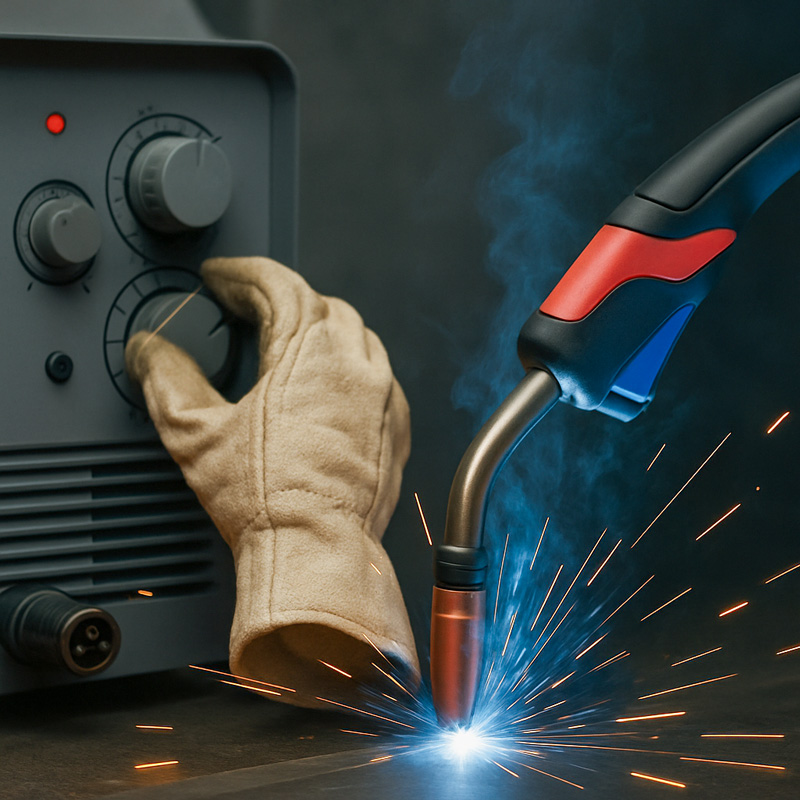
Symptoms: lack of penetration, burnt edges, porosity, excessive spatter.
Typical mistakes:
- Too low current – the weld sits “on top”, weak bonding.
- Too high current – material burns through, edges deform.
- Insufficient gas flow – oxygen enters the weld pool.
- Too high gas flow – turbulence drags atmosphere into the arc.
Prevention and solutions:
- Follow recommended values: for example, for steel wire Ø 1 mm, 90–120 A and 8–12 l/min argon/CO₂ is standard.
- For thin sheets, use the "synergies" or pulse function to optimize current and voltage.
- For aluminum, increase gas flow by 10–15% and use a shorter nozzle to protect the weld pool better.
Nozzle damage and its effects on welding
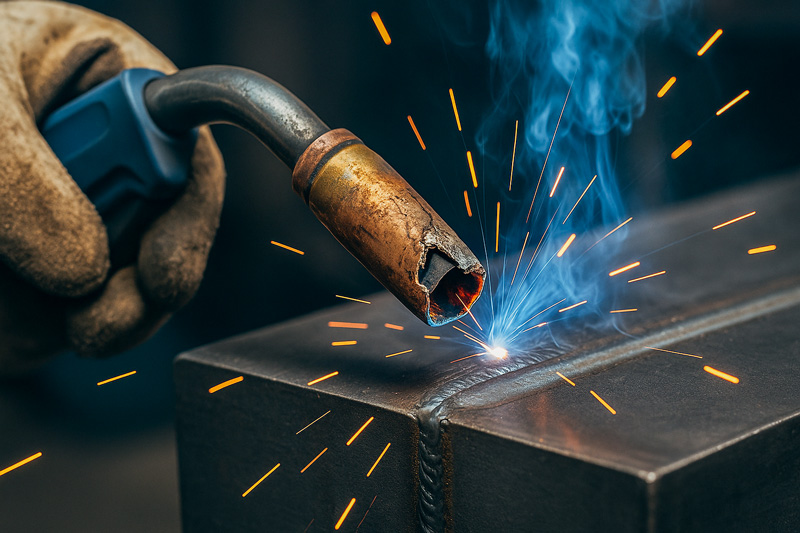
Symptoms: uneven shielding, spatter cone on the nozzle, sparking when the nozzle touches the material.
Most common causes:
- Weld spatter stuck on the nozzle – disrupts gas flow and narrows the opening.
- Overheating – nozzle warps or cracks.
- Physical impacts – bent nozzle misaligns gas flow with the wire.
Prevention and solutions:
- After each shift, clean with a brass brush and apply anti-spatter spray.
- Use water-cooled nozzles with thicker walls for currents above 250 A.
- Store torches in an upright position to avoid nozzle deformation.
Key Recommendations in Conclusion
- Follow a maintenance schedule – regular cleaning and replacement of consumables cost less than repairing the entire torch assembly.
- Train the operators – most errors arise from incorrect settings of current, gas flow, and roller pressure.
- Watch visual and acoustic signals – changes in arc sound, gas leaks, or wire jerking are early warnings you shouldn’t ignore.
A properly set, maintained, and adequately rated torch will reward you with clean, defect-free welds, higher productivity, and lower operating costs.