- Welding machines
- Welding torches
- Additional welding materials
- Abrasive & Cutting Material
- Protective equipment and clothing
- Tools
- Accessories

- Bevellers

- Cordless hand tools

- Accumulator multi-tool

- Batteries for cordless tools and chargers

- Cordless Extrusion and Hot Melt Guns

- Cordless Grease Guns

- Cordless Tool Sets

- Cordless compressors and pumps

- Cordless drilling and demolition hammers

- Cordless drills

- Cordless garden equipment

- Cordless grinders

- Cordless impact wrenches

- Cordless riveting machines

- Cordless saws

- Cordless soldering irons

- Cordless work lights

- Testers, Meters & Inspection Cameras

- Accumulator multi-tool
- Hand Tools

- Magnetic drills

- Power tools

- Punchers

- Storage systems

- Accessories
- Other products


Welding hoods


Welding helmet is an essential personal protective equipment (PPE) used by welders to protect the eyes, face, and neck from the hazards associated with welding. These hazards include intense light, heat, sparks, and potentially harmful ultraviolet (UV) and infrared (IR) radiation emitted during welding.
Key features and components of welding helmets:
The outer shell of a welding helmet is usually made of durable, heat-resistant materials such as thermoplastic or fiberglass. It provides physical protection against flying debris, slag, and intense heat.
The visor of a welding helmet is typically a specialized lens that protects the welder’s eyes from bright welding light and harmful radiation. Lenses can be either fixed or auto-darkening:
Fixed shade lens: Maintains a constant shade, usually suitable for specific types of welding with consistent light intensity.
Auto-darkening lens: Automatically adjusts the shade level depending on the intensity of the welding arc, offering greater versatility and ease of use.
A welding helmet is secured to the welder’s head using a headgear suspension system. The headgear is an adjustable support inside the helmet that ensures safe and comfortable wearing. It often includes padding and adjustment features to fit different head sizes and preferences.
Welding helmets – Protection for safe welding
During welding, eye and face protection is absolutely essential. Intense light, sparks, and hot metal particles pose a high risk of injury to the eyes and skin. A welding helmet is therefore an essential piece of equipment for every welder – whether a hobbyist in the garage or a professional in industrial production. Choosing the right helmet can significantly reduce the risk of injury while increasing comfort during work.
Modern helmets are no longer just simple mechanical protection. Thanks to advanced technologies such as auto-darkening lenses or PAPR systems with air supply, they have become sophisticated tools that protect not only against radiation and sparks, but also against smoke and dust. Choosing the right model should not be underestimated – it affects not only safety but also efficiency and comfort during welding.
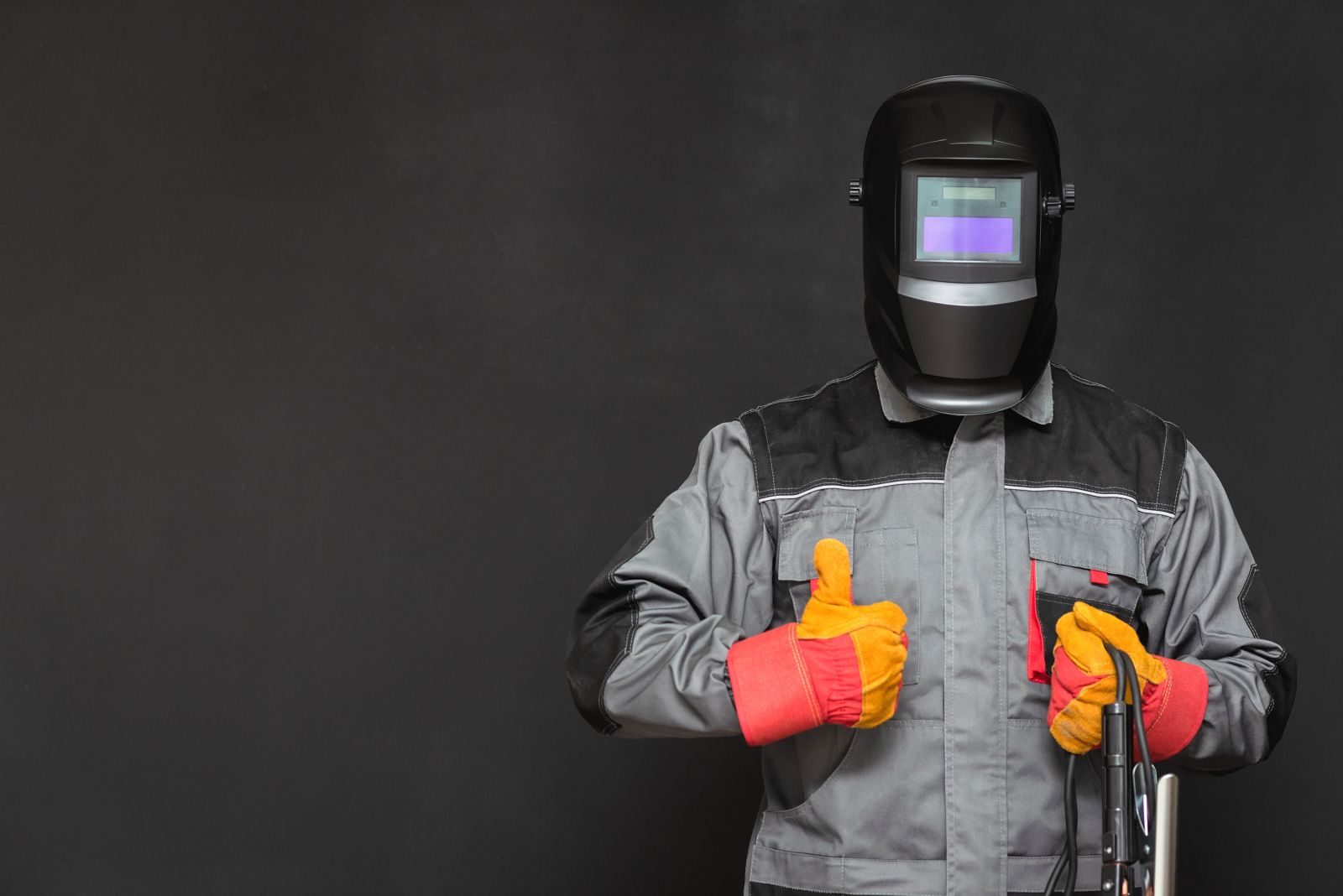
Why is a quality welding helmet essential for welding?
Welding produces extremely intense light and UV radiation, which can cause painful eye inflammations known as “arc eye” or “welder’s flash” even after short exposure. In addition, there is also a risk of skin burns from hot sparks or radiation. A quality welding helmet is therefore not just an accessory, but a fundamental health protection for anyone working with a welding arc. Without it, a welder risks permanent eye damage that cannot be reversed.
Beyond safety, the helmet also has a major impact on comfort and work efficiency. A well-designed visor allows better orientation in the workspace, while the ergonomic construction reduces neck and head fatigue during prolonged use. A welder who feels comfortable and has sufficient field of view can work more accurately and faster. Moreover, modern features such as auto-darkening significantly shorten the time between individual welding operations, resulting in higher productivity.
What types of welding helmets exist?
Today’s market offers several types of welding helmets, differing not only in price but also in the level of protection and user comfort. The right choice depends on the frequency of welding, the complexity of the job, and the working environment. Each type has its own specifics and is suitable for different groups of users – from hobby welders to industrial professionals.
The basic division includes:
- Classic welding helmets – a simple and reliable solution.
- Auto-darkening welding helmets – modern helmets with dynamic arc response.
- Welding helmet with PAPR system – a top solution for demanding and hazardous environments.
Each of these types has its advantages and limitations. Therefore, it is important to know what kind of work you perform most often and what level of protection and comfort you need for it.
Classic welding helmets
Passive welding helmets represent a classic and proven form of welding protection. Their design is simple – they contain a permanently darkened lens with a specific DIN filter value, which does not allow adjustment of the shade level. This means the welder has the same level of protection throughout the job, regardless of changes in arc intensity. Thanks to this simplicity, passive helmets are often affordable and reliable, as they contain a minimum of electronic components that could fail.
These helmets are especially suitable for beginners or occasional welding, where high flexibility of settings is not required. Their main advantages include low cost, durability, and easy maintenance. The drawback, however, is that the welder must manually lift and lower the helmet to check the work, which can become tiring with frequent use. In our offer, you will also find passive welding helmets that provide reliable protection for basic welding tasks.
Auto-darkening welding helmets
Auto-darkening welding helmets are among the most popular types thanks to their practicality and high level of protection. Their visor is equipped with sensors that immediately react to the ignition of the welding arc and darken the lens to the required level within a fraction of a second. When the arc extinguishes, the visor brightens again, allowing the welder to continuously monitor the workspace without lifting the helmet.
The biggest advantage of these helmets is comfort at work – the welder does not have to constantly adjust the helmet and has better visibility of the task. Modern models also offer the possibility to adjust sensor sensitivity, reaction speed, and shade level depending on the welding method (MMA, MIG/MAG, TIG). This means that a single helmet can be used for multiple techniques and adapt to specific conditions.
Auto-darkening welding helmets are suitable not only for professionals but also for hobby welders who want to increase their safety and comfort. In our offer you will find several models that combine reliable protection, high-quality visors, and an affordable price.
Welding helmets with PAPR systems
Welding helmets with PAPR systems represent the highest level of protection a welder can obtain. In addition to standard protection of the eyes and face against UV and IR radiation, they also provide respiratory protection. Thanks to an integrated fan and filtration unit, they supply clean air into the helmet, effectively eliminating the inhalation of hazardous fumes, gases, and dust produced during welding. This significantly increases safety and comfort, especially in enclosed or poorly ventilated areas.
The main advantages of welding helmets with PAPR systems include:
- Healthier working environment – protects the lungs from fumes and toxic particles.
- Greater comfort at work – constant supply of fresh air reduces fatigue.
- Suitable for long-term welding – ideal for professionals in demanding conditions.
These helmets may be more expensive, but the investment pays off wherever maximum health protection is a priority. In our offer, you will find helmets with PAPR systems that meet strict safety standards and ensure not only a clear view but also clean air with every weld.
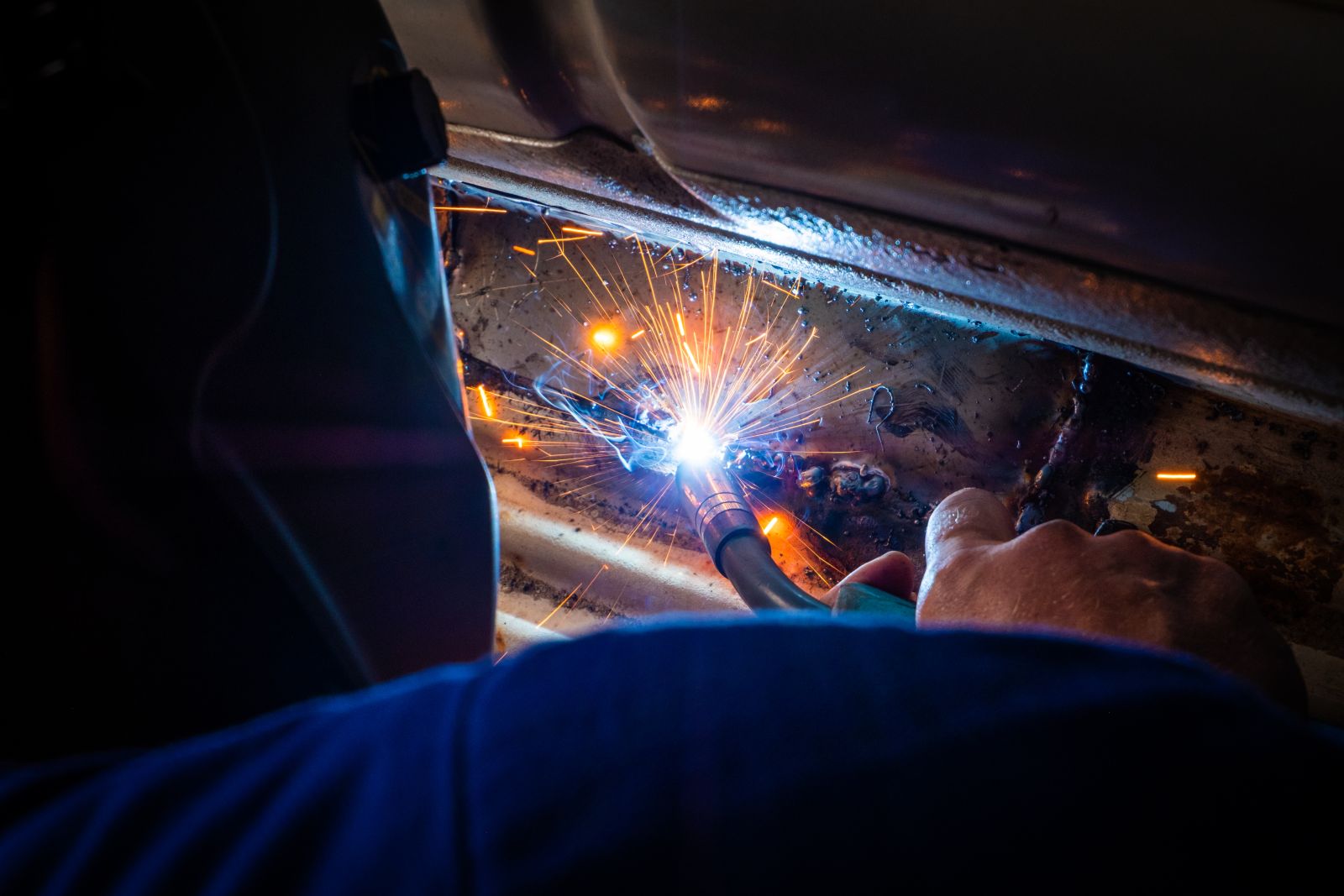
Important factors when choosing a welding helmet
Choosing the right welding helmet has a crucial impact on both safety and comfort at work. It is not enough to focus only on the price – technical parameters also matter, as they determine how well the helmet protects you and how comfortable it is to use. Important factors when deciding include protection level, lens quality, weight, power source, and filter reaction speed. Every welder should choose according to the technique they use most often and the conditions in which they work.
In addition to protective features, it is also important to consider ergonomics and helmet adjustability to individual needs. Modern models allow adjustments of shade, sensitivity, and darkening speed, offering greater flexibility for various welding types. A properly chosen helmet increases work productivity, reduces fatigue, and minimizes the risk of mistakes.
Protection level and darkness (DIN standards)
When choosing a welding helmet, the DIN rating of the lens plays a key role, as it determines the degree of shade. The higher the DIN value, the darker the lens. This is important because different welding techniques produce different light intensities.
Recommended DIN values by welding type:
- DIN 9 – 11: suitable for MIG/MAG or MMA welding at lower currents.
- DIN 11 – 13: ideal for welding at higher currents, where the arc intensity is stronger.
- DIN 5 – 8: often used for TIG welding or plasma cutting.
Choosing the correct DIN level is essential for eye protection while also ensuring that the welder has a clear view of the work area. Modern auto-darkening helmets offer an adjustable DIN range, allowing them to adapt to different welding techniques without the need to change the lens.
Lens size and quality
The size of the lens directly affects work comfort. Helmets with larger lenses provide a wider field of view, which is particularly advantageous for complex welding tasks or working in confined spaces. A larger view reduces the need for constant head tilting and improves spatial orientation.
In addition to size, the optical quality of the filter is also important. High-quality lenses ensure that the image is not distorted and that the welder can see the weld pool clearly and accurately. This allows for more precise torch guidance and reduces eye strain. At Valtec.sk you can find helmets with different lens sizes, from compact models to professional helmets with a panoramic view.
Reaction speed and sensitivity
The reaction speed of the filter is another important parameter when choosing a helmet. It indicates how quickly the lens darkens after the welding arc is struck. High-quality helmets react within fractions of a millisecond, protecting the eyes from dangerous flashes. The faster the reaction, the lower the risk of eye damage.
Sensor sensitivity is equally important. It ensures that the helmet reacts correctly during low-current welding or in environments with poor lighting conditions. Adjustable sensitivity allows the helmet to adapt to different welding techniques and prevents unwanted darkening, for example, from light reflections.
Weight and ergonomics of the helmet
For long-term welding, it is important that the helmet is lightweight and comfortable. A heavy helmet can cause neck pain, fatigue, and reduced concentration at work. Modern materials make it possible to produce strong yet lightweight helmets that do not strain the head even during all-day use.
In addition to weight, it is also necessary to consider the ergonomics of the headgear. High-quality helmets have adjustable straps that distribute the weight evenly and prevent pressure on specific areas of the head. This makes working with a welding helmet comfortable even during longer welds.
Power supply – solar cells or replaceable batteries?
Auto-darkening helmets require a power source to operate the filters and sensors. The two most common solutions are solar cells or replaceable batteries.
- Solar cells: the advantage is that the helmet recharges itself during welding, so frequent battery changes are not necessary. The disadvantage may be lower reliability in low light conditions.
- Replaceable batteries: provide reliability and stable performance, but need to be changed regularly. With intensive use, this can mean higher operating costs.
- Combined solutions: many modern helmets use a combination of solar cells and batteries, ensuring longer life and higher reliability.
The right choice depends on whether you weld regularly and professionally or only occasionally.
Why invest in an auto-darkening helmet?
Investing in an auto-darkening welding helmet brings many benefits that every welder will appreciate – from beginners to professionals. Modern helmets of this type can react instantly to the welding arc, providing not only a higher level of safety but also significantly greater comfort at work. As a result, productivity increases, fatigue decreases, and the welder can fully concentrate on the quality of the weld.
- Increased productivity and comfort - With traditional helmets, the visor must be constantly lifted and lowered, which interrupts and slows down the work. Auto-darkening helmets eliminate this issue – the visor automatically lightens after the arc is extinguished, allowing the welder to continue working immediately without unnecessary breaks. This means faster progress, fewer errors, and better use of working time. It also reduces the physical strain on the neck and arms since the helmet doesn’t need to be manually operated all the time.
- Better eye protection for multiple welding types - Auto-darkening helmets offer a wide DIN shade range, making them suitable for various welding techniques – from MMA to TIG. Sensors instantly react to changes in arc intensity and adjust the shade to the current conditions. This ensures the welder’s eyes are always optimally protected, regardless of the method used. Compared to passive helmets, you gain confidence in safety for every task.
- Flexible adjustment of settings according to the task - Modern auto-darkening helmets allow individual adjustment of sensitivity, reaction speed, and shade level. The welder can thus adapt the helmet to the specific technique, current, or work environment. Some models also offer a delay function for lightening, which prevents glare from the residual arc. Thanks to this flexibility, the helmet becomes a universal tool capable of handling a wide range of tasks.
How to extend the lifespan of your welding helmet?
Proper maintenance and care of your welding helmet is just as important as choosing the right one. Even the most advanced helmet will lose its functionality if not maintained regularly. Cleaning the lens, checking the power supply, and protecting it from damage significantly extend its lifespan and ensure the helmet reliably protects during every job.
By following a few simple steps, you can prevent premature wear and keep your helmet in perfect condition:
- Cleaning and replacing filters - During welding, dirt, smoke, and metal particles accumulate on the lens and filters. If not removed, they can impair visibility and shorten the filter’s lifespan. Therefore, it is advisable to gently clean the helmet after each use with a soft cloth or a special cleaning agent. If the filter is significantly damaged or scratched, it should be replaced with a new one.
- Checking batteries and solar cells - Auto-darkening helmets are powered by solar cells or replaceable batteries. Regularly checking the power supply is essential to prevent failures during work. If the helmet stops responding properly to the arc, it is often a sign of a discharged battery or a dirty solar cell.
- Proper storage and lens protection against scratches - The helmet should always be stored in a dry and safe place, away from direct sunlight or extreme temperatures. Protecting the lens from scratches is crucial – placing the helmet directly on a hard surface can cause permanent damage. It is best to use protective covers or hang the helmet on a hook.
- Regularly checking the darkening function - Before starting work, it is recommended to always test the auto-darkening function. A quick test with a light source or a trial arc ensures that the helmet reacts correctly and provides the expected protection. Regular checks reduce the risk of unpleasant surprises during welding.
What to avoid when using a welding helmet?
Although a welding helmet is designed to provide maximum protection for the welder, improper use can significantly reduce its effectiveness. Many welders make mistakes that shorten the helmet’s lifespan or even endanger their eyesight and health. The most common issues include neglecting maintenance, using damaged parts, or incorrectly setting the lens shade.
You should especially avoid the following mistakes:
- using a damaged or worn-out lens,
- ignoring regular maintenance and cleaning,
- choosing the wrong DIN shade level for the specific welding technique.
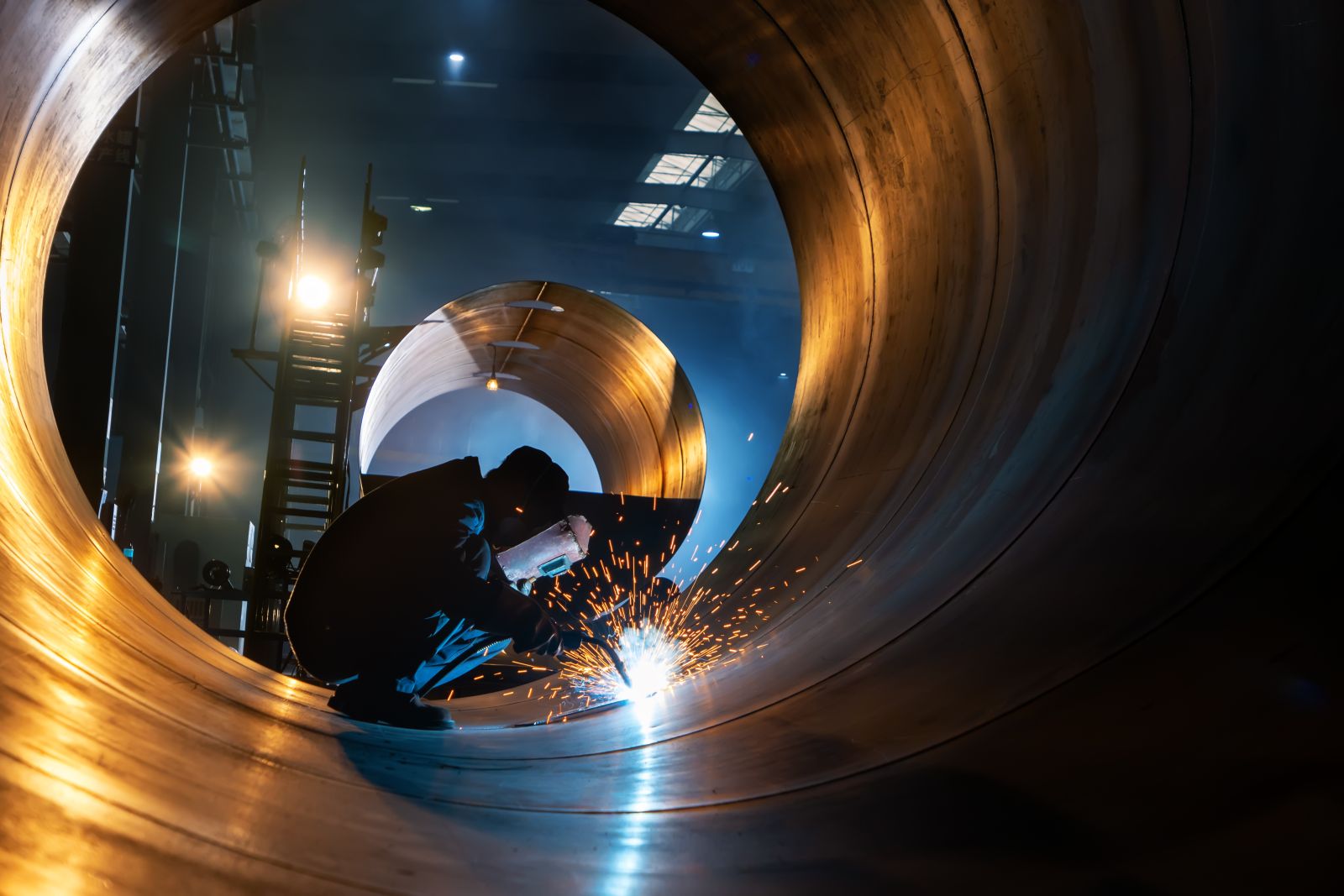
Which welding helmets from our offer are worth your attention?
In our selection, you will find a wide range of welding helmets that meet the needs of both hobbyists and professionals. When choosing, we considered not only a high standard of protection but also comfort, reliability, and a favorable price-to-quality ratio. Thanks to this, you can choose the model that best matches your work requirements.
Classic Welding Helmets - Reliability at an Affordable Price
Classic welding helmets, also known as passive helmets, are an ideal choice for welders looking for simplicity, reliability, and affordability. These helmets feature a fixed lens shade, usually in the range of #10 to #14, providing constant protection against UV and IR radiation.
Leather Helmet for Narrow Spaces TECMEN N-SPACE with ADF110P
- Specially designed for work in confined spaces
- Combines the advantages of a classic helmet with an advanced ADF filter
- Ideal for maintenance and assembly work
Leather Welding Helmet for Confined Spaces KPRO 8912
- Affordable alternative for work in confined spaces
- Leather material provides additional protection
- Suitable for standard welding tasks
Auto-Darkening Welding Helmets - Modern Technology for Professionals
Auto-darkening helmets represent the latest technology in welder protection. They automatically adjust to the light intensity and provide optimal visibility throughout the welding process.
TECMEN TM100 LW for Laser Welding
- Specialized helmet for laser welding
- Viewing area size 96x46.5 mm
- Cutting-edge technology for precise applications
TECMEN TM 1000 Set with PAPR System FreFlow V3
- Complete solution with fume extraction
- Flip-up functionality ADF950S
- Large viewing area 107x75 mm for optimal visibility
- Premium helmet with flip-up function
- Matte blue color
- High-quality German manufacturing
Welding Helmets with PAPR - Maximum Respiratory Protection
For work in environments with a high concentration of harmful fumes, helmets with a PAPR (Powered Air Purifying Respirator) system are essential. These systems supply clean air directly into the helmet.
TECMEN TM 1000 Set + PAPR System FreFlow V3
- Top solution for demanding industrial applications
- Complete set with bag, charger, and hose
- Flip-up helmet with large viewing area
- Premium German-quality system
- Flip-up functionality for practicality
- Professional solution for long-term work
TECMEN 900 Set + PAPR System FreFlow V1
- More affordable version of the PAPR system
- Reliable respiratory protection
- Suitable for medium-sized operations

Charger for CleanAIR Chemical (510030EUR)
157,01 € incl. tax
Cross suddenly to SK100 (KZ600) hood
5,66 € incl. tax
Speedglas cross for helmets SL/100 /9000 /9002 SPEEDGLAS (705015)
40,86 € incl. tax
Clear glass 110x90mm
0,37 € incl. tax
Glass dia. 50 mm clear
0,34 € incl. tax
Auto-darkening welding helmet BOHLER Evolution V 80 (89068) blue
299,99 € incl. tax 362,99 € without TAX
446,48 € incl. tax
Grinding shield film 248x114,4mm TECMEN 600S-N (TM32-V) 106322
4,61 € incl. tax
Set TECMEN TM100LW + PAPR system FreFlow V1 (bag, charger, BR-30 hose) PT9990PAPR090
898,99 € incl. tax
TECMEN FreFlow V1 filter unit
602,70 € incl. tax
Leather welding hood for tight spaces TECMEN N-SPACE with ADF110P (108x51mm)
98,28 € incl. tax
Inner foil 97x72.2mm TECMEN TM24 (ADF835S) PJ20200004009
0,97 € incl. tax
Head cross for JASIC LYG K800D balaclava
18,20 € incl. tax
Welding leather hood for narrow spaces KPRO 8912
22,02 € incl. tax
Self-dimming cassette TECMEN ADF950S iExp (viewer 107x75mm)
215,25 € incl. tax
Self-dimming hood TECMEN TM24 (ADF835S) iWeld Series (visor 97x67.5mm)
170,97 € incl. tax
Auto-dimming hood cartridge JASIC LYG P500A (10072860)
22,14 € incl. tax
Auto-dimming hood JASIC LYG K800D (10069518)
39,99 € incl. tax 36,50 € without TAX
44,89 € incl. tax
Self-dimming hood BOHLER Evolution Vision 65F (87127) blue flip-up
455,10 € incl. tax
Extraction set BOHLER Guardian 62F Air (77006)
1 248,70 € incl. tax
Auto-darkening helmet LORCH AutoProtect APR 900 (553.1100.0)
487,08 € incl. tax
OPTREL NEO P550 auto-darkening helmet (1007.011) green-black
321,30 € incl. tax


Popular product brands






















ZVARCENTRUM - VALTEC
VALTEC spol.s r.o., in the ZVARCENTRUM division, focuses on the entire range of products necessary not only for welders. Sales of welding equipment and accessories, attachments and consumables, power tools, AKU and hand tools, and sales of technical gases. In terms of services, we offer professional servicing of welding equipment, accessories and tools and sales of technical gases.
Address
Opening hours
Contact
VALTEC spol. s r. o.
Lieskovská cesta 13
962 21 Lieskovec
View on the map
| Monday: | 7:00 - 16:00 |
| Tuesday: | 7:00 - 16:00 |
| Wednesday: | 7:00 - 16:00 |
| Thursday: | 7:00 - 16:00 |
| Friday: | 7:00 - 16:00 |
| Saturday: | Closed |
| Sunday: | Closed |

Lieskovská cesta 13
962 21 Lieskovec