- Welding machines
- Welding torches
- Additional welding materials
- Abrasive & Cutting Material
- Protective equipment and clothing
- Tools
- Accessories

- Bevellers

- Cordless hand tools

- Accumulator multi-tool

- Batteries for cordless tools and chargers

- Cordless Extrusion and Hot Melt Guns

- Cordless Grease Guns

- Cordless Tool Sets

- Cordless compressors and pumps

- Cordless drilling and demolition hammers

- Cordless drills

- Cordless garden equipment

- Cordless grinders

- Cordless impact wrenches

- Cordless riveting machines

- Cordless saws

- Cordless soldering irons

- Cordless work lights

- Testers, Meters & Inspection Cameras

- Accumulator multi-tool
- Hand Tools

- Magnetic drills

- Power tools

- Punchers

- Storage systems

- Accessories
- Other products


Welding wires for aluminum - 2.4 mm
Aluminum Welding Wires
Welding aluminum and its alloys is specific and requires a high-quality aluminum welding wire to ensure a strong and durable joint. Several types are available – most commonly wires based on AlMg (aluminum–magnesium) and AlSi (aluminum–silicon) alloys. The choice of wire depends on the welded material and the desired weld properties.
✅ Advantages of aluminum wires lie in their ability to create a lightweight yet strong weld with excellent corrosion resistance. At the same time, the joint maintains good mechanical properties even at lower weight, which is especially important in the automotive and aerospace industries.
❌ On the other hand, the disadvantages of welding aluminum include higher demands on material cleanliness – the surface must be free of oxides, oils, and impurities, otherwise weld quality may decrease. Aluminum is also highly conductive, which means it requires precise machine parameter settings and often the use of special feeding systems to prevent the wire from breaking or jamming.
Applications of aluminum wires are very broad. They are used in the production and repair of frame structures, ships, automotive parts, tanks, and pipelines. They are also popular in the energy and engineering sectors, where a combination of low weight and high strength is required.
👉 If you need to reliably join aluminum or its alloys, aluminum MIG/MAG welding wires are the right solution.
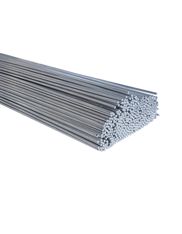
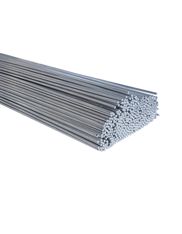

TIG WELD ML5356 (AlMg5) Wire 2.4x1000mm/5kg
12,48 € incl. tax


Popular product brands



























ZVARCENTRUM - VALTEC
VALTEC spol.s r.o., in the ZVARCENTRUM division, focuses on the entire range of products necessary not only for welders. Sales of welding equipment and accessories, attachments and consumables, power tools, AKU and hand tools, and sales of technical gases. In terms of services, we offer professional servicing of welding equipment, accessories and tools and sales of technical gases.
Address
Opening hours
Contact
VALTEC spol. s r. o.
Lieskovská cesta 13
962 21 Lieskovec
View on the map
| Monday: | 7:00 - 16:00 |
| Tuesday: | 7:00 - 16:00 |
| Wednesday: | 7:00 - 16:00 |
| Thursday: | 7:00 - 16:00 |
| Friday: | 7:00 - 16:00 |
| Saturday: | Closed |
| Sunday: | Closed |

Lieskovská cesta 13
962 21 Lieskovec